What Consumer Sleep Technology Can—and Can’t—Tell You About Your Sleep
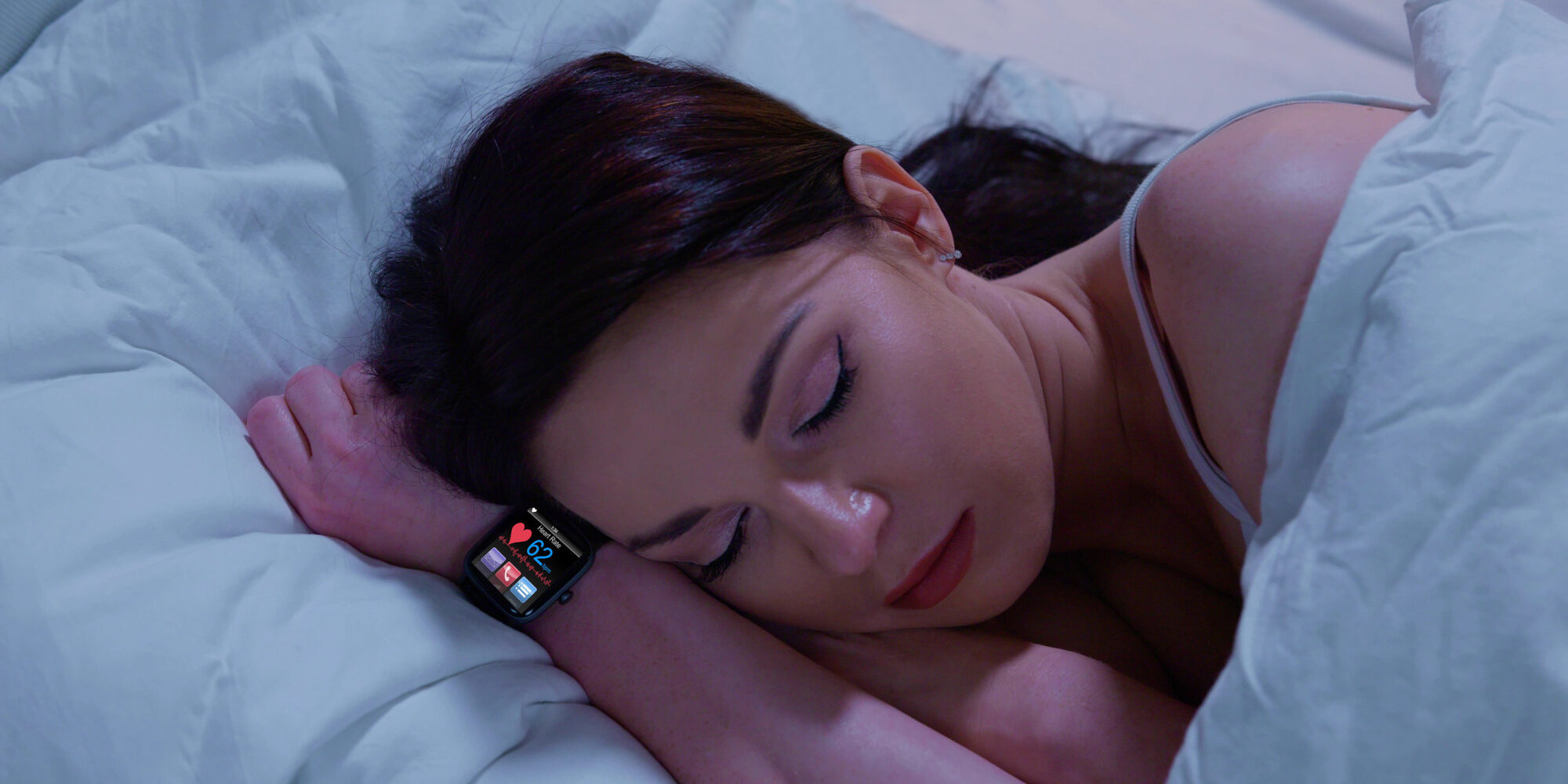
If you wear a smartwatch or sleep-tracking ring, there’s a good chance you’ve looked at your phone first thing in the morning and seen something like this:
Sleep: 7 hours 42 minutes.
Deep sleep: 1 hour 18 minutes.
REM sleep: 1 hour 47 minutes.
Sleep score: 86.
It can feel remarkably precise.
And today’s wearable technology really is impressive. Smartwatches, fitness trackers, rings, and smartphone apps can collect information about movement, heart rate, blood oxygen levels, temperature, and other physiological signals while we sleep.
Nearly half of U.S. adults surveyed by the American Academy of Sleep Medicine (AASM) reported having used some type of sleep-tracking device, demonstrating just how mainstream these technologies have become. [1]
But there is an important distinction that can get lost in all those numbers:
A sleep tracker can give you information about your sleep without actually measuring sleep in the same way a sleep study does.
That distinction matters.
What Is Your Smartwatch Actually Measuring?
Most consumer sleep trackers don’t directly measure sleep itself.
Instead, they use sensors and algorithms to estimate what is happening while you sleep.
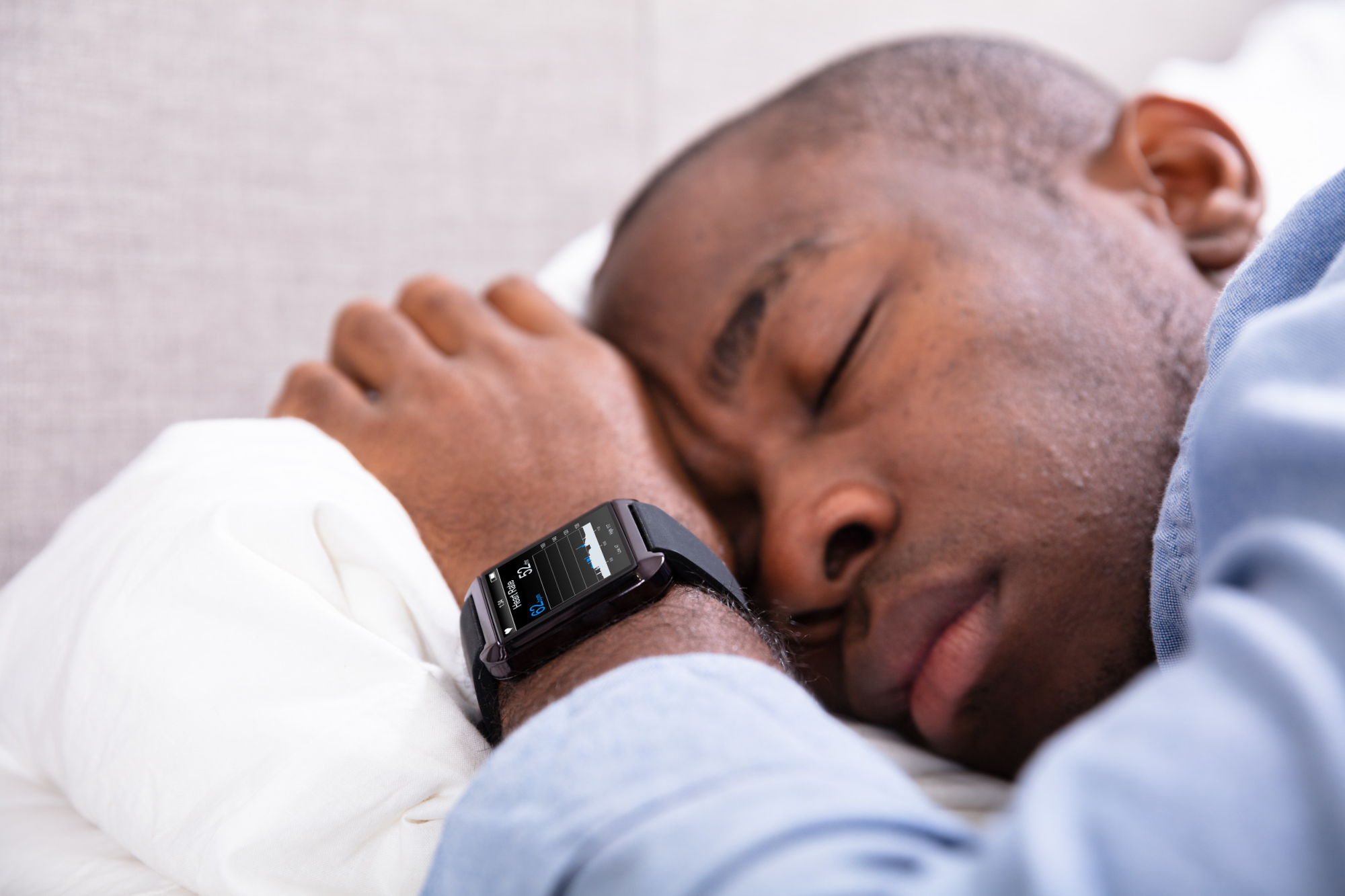
For example, a smartwatch may use an accelerometer to determine whether you are moving. It may monitor your heart rate and heart-rate variability. Some devices also measure blood oxygen saturation, skin temperature, or other physiological signals.
The device then uses algorithms to interpret those signals and estimate when you were asleep, when you were awake, and—in some cases—what stage of sleep you may have been experiencing.
That can be useful.
But an estimate is not the same thing as a direct measurement.
In a traditional overnight polysomnogram (PSG), sleep professionals can measure brain activity with electroencephalography (EEG), eye movements, muscle activity, heart activity, breathing, oxygen levels, body position, and other signals. These measurements allow a sleep professional to determine when someone is actually asleep and identify specific sleep stages and breathing events.
A smartwatch doesn’t have all of those measurements available.
That’s one reason the numbers on your wrist should be viewed as information not a diagnosis.
“But My Watch Knows When I’m in REM Sleep…”
This is one of the most interesting—and misunderstood—features of modern wearables.
Many devices provide detailed estimates of light sleep, deep sleep, and REM sleep.
Research shows that consumer wearables can be reasonably good at identifying periods of sleep versus wake, but their ability to accurately distinguish individual sleep stages is more variable.
A 2024 meta-analysis comparing consumer wrist-worn sleep trackers with polysomnography found meaningful differences between wearable estimates and PSG measurements for several important sleep parameters, including total sleep time, sleep efficiency, sleep latency, and wake after sleep onset. The researchers concluded that these devices may be useful for tracking general sleep patterns, but their limitations should be recognized. [2]
Another study comparing an Oura Ring, Fitbit Sense 2, and Apple Watch Series 8 with polysomnography found high sensitivity for identifying sleep versus wake, but considerably more variability when distinguishing individual sleep stages. [3]
So if your watch tells you that you had 1 hour and 23 minutes of deep sleep, it doesn’t necessarily mean that you actually had exactly 1 hour and 23 minutes of stage N3 sleep.
It means the device’s algorithm estimated that amount based on the signals it could detect.
That is an important difference.
What Your Wearable Can Do Well
None of this means sleep trackers are useless.
Quite the opposite.
Used appropriately, they can be helpful tools for recognizing patterns.
For example, a wearable might help you notice that:
- You consistently sleep less than you think you do.
- Your bedtime changes dramatically from weekday to weekend.
- You are getting substantially less sleep during stressful periods.
- Your sleep becomes more fragmented after drinking alcohol.
- Your sleep schedule changes when you travel.
- Your resting heart rate behaves differently during periods of illness or stress.
- Your sleep duration improves when you maintain a more consistent schedule.
Those trends can be valuable.
Instead of focusing on whether last night’s “deep sleep” was exactly 62 minutes or 74 minutes, it may be more useful to ask:
What does my sleep look like over several weeks?
That is where consumer sleep technology can become genuinely helpful.
Where Things Get More Complicated: Sleep Apnea
Sleep apnea is where we need to be particularly careful.
Some newer smartwatches and other consumer devices have received FDA clearance for features that assess a person’s risk of sleep apnea.
That is an important advancement in sleep technology.
But notice the wording:
Risk assessment.
Not diagnosis.
The FDA’s classification for over-the-counter devices that assess sleep apnea risk specifically states that these devices are intended to provide a risk assessment and are not intended to provide a standalone diagnosis or replace traditional diagnostic methods such as polysomnography. [4]
The AASM makes the same point.
Its health advisory on sleep apps and devices notes that these technologies can provide useful information and may help identify people who should seek further evaluation. However, they vary in accuracy, generally cannot reliably distinguish obstructive sleep apnea from other sleep-related breathing disorders, and cannot diagnose sleep apnea or confirm that someone does not have it. [5]
That’s an important message for anyone who has ever thought:
“My watch says my oxygen looks fine, so I know I don’t have sleep apnea.”
Unfortunately, that’s not a safe conclusion.
A “Good” Sleep Score Doesn’t Mean You Slept Well
Here’s another trap.
You can receive a very good sleep score and still have a significant sleep disorder.
Imagine someone who spends eight hours in bed, appears to sleep for most of that time, and receives a sleep score in the 80s.
But during those eight hours, that person may experience repeated episodes of upper-airway obstruction.
Each event can cause changes in breathing, oxygen levels, heart rate, and sympathetic nervous system activity. The person may partially awaken, or experience an arousal that they don’t remember the next morning.
The result?
They may technically have spent plenty of time in bed while still experiencing poor-quality, fragmented sleep.
And they may wake up thinking:
“My watch says I slept great. Why am I exhausted?”
That is exactly where a conversation with a healthcare professional becomes more important than the sleep score on a phone.
What About Blood Oxygen?
Blood oxygen measurements can be particularly interesting to people who are concerned about sleep apnea.
Some wearables can estimate oxygen saturation using optical sensors.
But there is an important limitation: a wearable’s oxygen reading isn’t necessarily equivalent to the measurements obtained from a clinical sleep study.
Even more importantly, sleep apnea isn’t diagnosed simply by looking at an oxygen number.
Sleep professionals look at the entire picture—including breathing patterns, airflow, respiratory effort, oxygen changes, sleep time, body position, symptoms, medical history, and other relevant information.
Someone can have sleep apnea without dramatic oxygen desaturations.
And a person can have abnormal oxygen readings for reasons other than obstructive sleep apnea.
That’s why a wearable’s oxygen information can be a clue, but it shouldn’t be treated as a definitive answer.
The Most Important Number May Not Be on Your Wrist
One of the biggest problems with consumer sleep technology is that it can make sleep seem more complicated than it needs to be.
You can spend five minutes every morning analyzing:
- Deep sleep
- REM sleep
- Sleep efficiency
- Resting heart rate
- Respiratory rate
- Oxygen saturation
- Heart-rate variability
- Sleep score
- Recovery score
- Readiness score
And still miss the most important question:
How do I actually feel during the day?
Do you regularly wake up feeling unrefreshed?
Are you excessively sleepy during the day?
Do you struggle with concentration or memory?
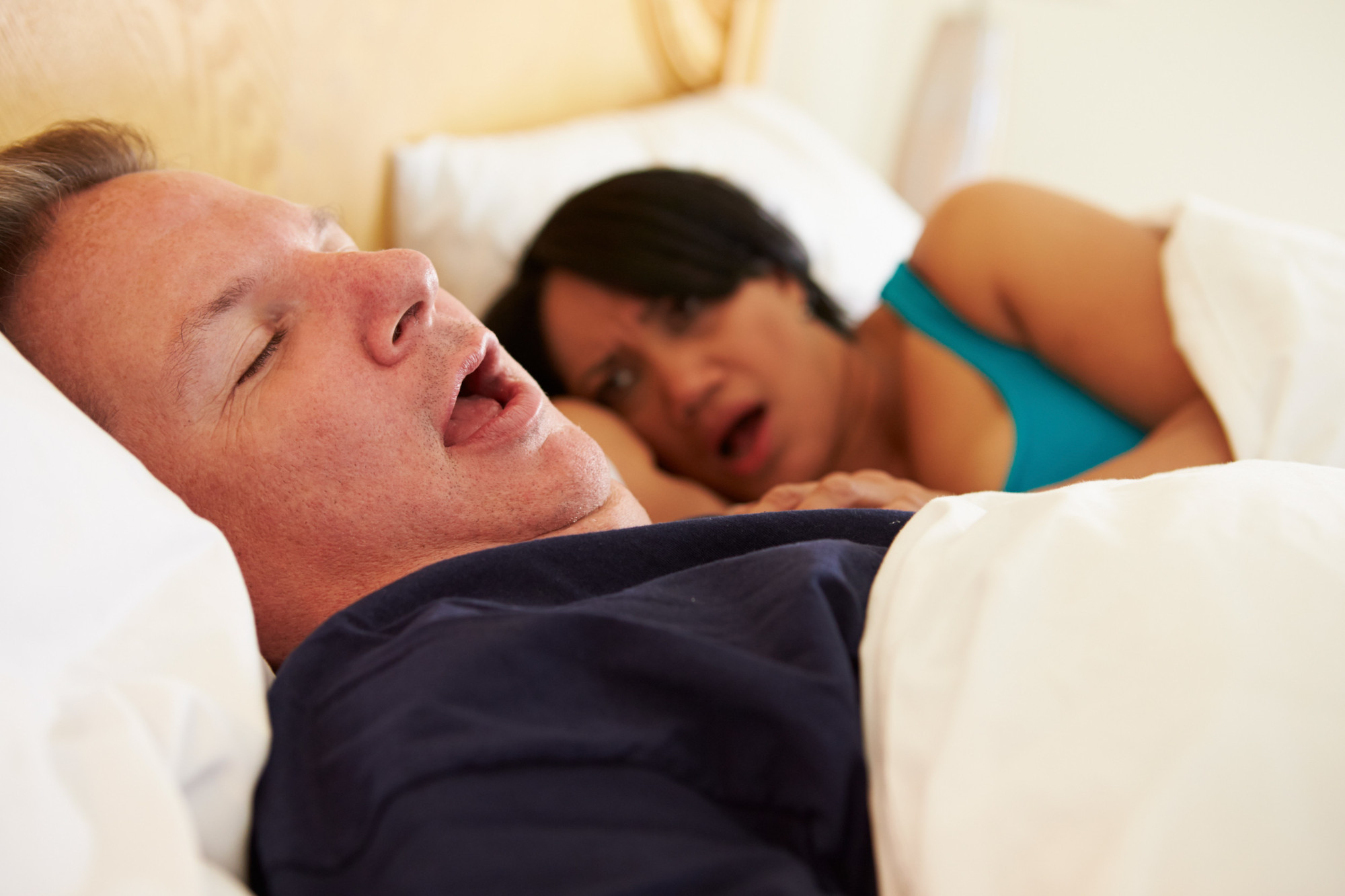
Do you snore loudly?
Does someone notice pauses in your breathing?
Do you wake up gasping or choking?
Do you wake with headaches or a dry mouth?
Are you frequently waking during the night?
Do you find yourself fighting sleep while watching television, reading, sitting in meetings, or driving?
Those questions may tell us more about whether something needs to be investigated than whether your watch gave you a sleep score of 78 or 91.
So, Should You Stop Wearing Your Smartwatch?
Absolutely not.
For many people, wearable technology can be a useful way to become more aware of their sleep habits.
Think of it as a sleep journal with sensors.
It can help you identify patterns and give you information to discuss with your healthcare provider.
Just don’t let the device become the final authority on your sleep.
A smartwatch can tell you that something changed.
It may even identify a pattern that deserves attention.
But it can’t take a complete sleep history, perform a physical examination, interpret your symptoms in context, or replace a medical evaluation.
And if sleep apnea is suspected, the next step isn’t necessarily buying a more expensive watch.
It may be talking with a healthcare professional about whether a sleep evaluation, and potentially a medically ordered home sleep apnea test or an overnight sleep study, is appropriate.
The AASM’s current guidance emphasizes that a home sleep apnea test is a medical assessment that should be ordered based on an individual’s history and clinical evaluation, and that automatically generated data should not be the sole basis for diagnosis or treatment decisions. [6]
The Bottom Line
Wearable sleep technology has come a long way.
And it will likely continue to improve.
That’s a good thing.
For many people, these devices can encourage greater awareness of sleep and help identify patterns that might otherwise go unnoticed.
But the more precise the numbers look, the easier it is to forget that many of them are still estimates generated by algorithms.
Your smartwatch may tell you that you slept for 7 hours and 42 minutes.
It may estimate that you spent 1 hour and 18 minutes in deep sleep.
It may even tell you that it detected a pattern associated with sleep apnea.
Those numbers can be useful.
But they are not the same thing as a medical diagnosis.
Use your wearable as a tool, not as your sleep doctor.
If your device raises a question, or if your symptoms tell you that something isn’t right, that’s when it’s time to look beyond the screen and have a conversation with a qualified healthcare professional.
Because sometimes the most important sleep information isn’t what your watch says.
It’s how you feel when you wake up, and how you function when you’re awake.
References
- American Academy of Sleep Medicine. AASM Sleep Prioritization Survey Using Sleep Tracking Devices. 2025 survey of 2,007 U.S. adults.
- Lee YJ, Lee JY, Cho JH, Kang YJ, Choi JH. Performance of consumer wrist-worn sleep tracking devices compared to polysomnography: a meta-analysis. Sleep Medicine. 2024.
- Accuracy of Three Commercial Wearable Devices for Sleep Tracking in Healthy Adults. Comparison of Oura Ring Gen3, Fitbit Sense 2, and Apple Watch Series 8 with polysomnography.
- U.S. Food and Drug Administration. Product Classification: Over-the-Counter Device to Assess Risk of Sleep Apnea.
- American Academy of Sleep Medicine. Health Advisory: Sleep Apps and Devices that Self-Assess Risk of Obstructive Sleep Apnea. 2025.
- American Academy of Sleep Medicine. Clinical Use of a Home Sleep Apnea Test: An Updated American Academy of Sleep Medicine Position Statement.